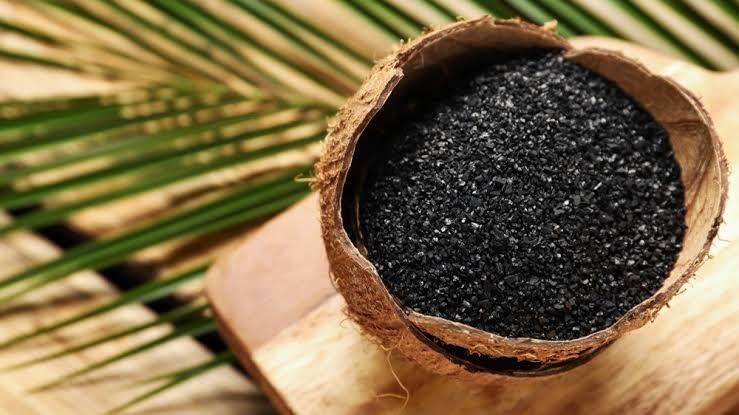
Premium eco-friendly activated carbon derived from renewable coconut shell — delivering superior adsorption performance for gold recovery, water treatment, air purification and food-grade applications.
Coconut shell activated carbon is widely recognised as the highest-quality natural activated carbon available. Produced through controlled steam activation of coconut shell charcoal, it develops an exceptionally dense micropore structure that makes it highly effective at adsorbing small organic molecules — including chlorine, taste and odour compounds, volatile organic compounds (VOCs), and trace contaminants.
Compared to coal or wood-based alternatives, coconut shell activated carbon offers superior hardness, lower ash content, and greater resistance to attrition — resulting in longer service life, less media loss, and lower long-term operating costs.
Carbo Fresh Pte Ltd sources coconut shell activated carbon from a trusted manufacturing partner in India, ensuring consistent quality, certified specifications, and reliable supply for our Singapore and global clients.
Coconut shell activated carbon sets the benchmark for adsorption quality, hardness and purity across the activated carbon industry.
A well-developed micropore structure delivers iodine values of 800–1200 mg/g, providing outstanding capacity for removing organic contaminants, chlorine, taste and odour compounds from water and air.
Hardness ratings of ≥ 95% ensure minimal attrition during backwashing and regeneration cycles — extending media life significantly and reducing replacement frequency and costs.
Ash content of ≤ 3% minimises leaching of inorganic impurities into treated water or process streams — critical for drinking water, food-grade, and pharmaceutical applications requiring high purity.
Derived from coconut shells — a natural agricultural by-product — our activated carbon is produced from a fully renewable and sustainable raw material, reducing environmental impact without sacrificing performance.
Coconut shell activated carbon can be thermally reactivated and reused multiple times, making it a cost-effective long-term choice for large-scale applications with reactivation infrastructure.
Available in granular (GAC), powdered (PAC), and extruded pellet forms, with various mesh sizes to match your specific application, equipment, and performance requirements.
Coconut shell activated carbon is the preferred choice across high-purity and performance-critical industrial applications.
Used in carbon-in-pulp (CIP) and carbon-in-leach (CIL) gold processing circuits for selective adsorption of gold-cyanide complexes from ore slurries.
Chlorine removal, taste and odour control, pesticide adsorption, THM precursor removal, and purification in municipal and industrial water systems.
VOC removal, solvent vapour recovery, odour control, hydrogen sulphide capture, and indoor air quality improvement in commercial and industrial settings.
Sugar decolourisation, beverage purification (wine, spirits, beer), flavour enhancement, and process water treatment compliant with food safety regulations.
Purification of active pharmaceutical ingredients (APIs), decolourisation, process water treatment, and cleanroom air filtration to meet GMP requirements.
Process water polishing, solvent recovery, catalyst applications, chemical decolourisation, and various industrial liquid and gas purification processes.
Typical specifications for Carbo Fresh coconut shell activated carbon. Exact parameters vary by grade — contact us for product-specific datasheets.
| Parameter | Unit | GAC 4×8 | GAC 8×16 | GAC 12×40 |
|---|---|---|---|---|
| Iodine Number | mg/g | ≥ 1000 | ≥ 1000 | ≥ 900 |
| Moisture Content | % | ≤ 5 | ≤ 5 | ≤ 5 |
| Ash Content | % | ≤ 3 | ≤ 3 | ≤ 3 |
| Hardness (Ball-Pan) | % | ≥ 95 | ≥ 95 | ≥ 95 |
| Apparent Density | g/mL | 0.45–0.55 | 0.45–0.55 | 0.45–0.55 |
| BET Surface Area | m²/g | ≥ 1000 | ≥ 1000 | ≥ 950 |
| Pore Volume | mL/g | 0.6–0.8 | 0.6–0.8 | 0.55–0.75 |
| pH (in water) | — | 6–8 | 6–8 | 6–8 |
| Parameter | Unit | PAC (200 Mesh) | Pellet 3mm | Pellet 4mm |
|---|---|---|---|---|
| Iodine Number | mg/g | ≥ 900 | ≥ 1000 | ≥ 1000 |
| Moisture Content | % | ≤ 10 | ≤ 5 | ≤ 5 |
| Ash Content | % | ≤ 5 | ≤ 3 | ≤ 3 |
| Hardness | % | N/A | ≥ 90 | ≥ 90 |
| Particle Size | µm / mm | ≤ 75 µm | 3 mm ± 0.3 | 4 mm ± 0.3 |
| Apparent Density | g/mL | 0.35–0.45 | 0.50–0.60 | 0.50–0.60 |
| BET Surface Area | m²/g | ≥ 900 | ≥ 1000 | ≥ 1000 |
* Typical values. Certificates of Analysis (COA) and full technical datasheets available upon request. Custom specifications can be sourced based on your requirements.
We supply coconut shell activated carbon in industry-standard packaging formats to suit your order size and handling requirements.
Standard polypropylene woven bags with inner polyethylene liner. Suitable for granular and pellet grades. Easy to handle and palletise.
Flexible intermediate bulk containers (FIBC / big bags) for high-volume orders. Efficient for container loading and large-scale operations.
Full container loads (20ft or 40ft FCL) available for large-volume orders. Both loose bulk and palletised configurations accommodated.
Custom packaging arrangements can be accommodated based on your requirements. Please specify your preferred packaging format when requesting a quote.
Gold Mining
Water Utilities
Air Purification
Food & Beverage
Pharmaceutical
Chemical Processing
Environmental
Municipal Systems
Coconut shell activated carbon has a predominantly microporous structure (pore size < 2 nm), which is ideal for adsorbing small organic molecules like chlorine, taste and odour compounds, and trace organics found in drinking water. It also has lower ash content and higher hardness, resulting in less media loss and lower risk of leaching. For drinking water applications requiring high purity, coconut shell is generally the preferred and superior choice.
Yes. Coconut shell activated carbon is one of the most widely used adsorbents in gold recovery circuits. Its high hardness is critical in CIP and CIL processes, where the carbon undergoes repeated abrasion in agitated tanks. High iodine values ensure strong gold loading capacity, while the micropore structure facilitates selective adsorption of the gold-cyanide complex. We can supply specific grades and mesh sizes optimised for gold recovery applications.
We typically supply coconut shell GAC in 4×8, 8×16, 8×30, 12×40, and 20×50 mesh sizes, covering coarse to fine particle ranges. Pellet grades are available in 3mm and 4mm diameters. PAC is available at 200 mesh (75 µm) and finer. If you require a specific mesh size not listed, contact us as custom grades can often be sourced from our manufacturing partners.
Yes. We provide technical datasheets, typical analysis reports, and batch-specific certificates of analysis (COA) for all product shipments. Documentation requirements can be discussed at the time of order placement.
MOQ varies depending on the product grade, form, and destination. Generally, we can accommodate orders from small trial quantities upward. Please contact our team with your specific requirements — quantity, grade, form, and delivery location — and we will advise on MOQ, pricing, and lead time accordingly.
Coconut shell activated carbon should be stored in a dry, cool, well-ventilated area away from direct sunlight, heat sources, and moisture. Keep bags sealed until use. Avoid storing near solvents, fuels, or oxidising agents. When stored properly in sealed packaging, shelf life is typically 2 years from the date of manufacture.